Key Takeaways
- October is National Spine Health Awareness Month, a nationwide effort to help people understand and protect their spine health.
- Spinal compression fractures are one of the most common — and most overlooked — causes of sudden back pain, especially in adults over 50.
- Balloon kyphoplasty is a minimally invasive procedure that can stabilize a fractured vertebra and relieve pain, often within days.
- Some early signs of a compression fracture are easy to mistake for ordinary muscle strain, which can delay treatment.
- West Michigan Pain provides advanced, minimally invasive treatment for spinal compression fractures at its Big Rapids, MI clinic, and patients can request an appointment to start their evaluation.
What Is National Spine Health Awareness Month?
Every October, the National Spine Health Foundation leads a nationwide effort to educate the public about spinal health, encourage healthy movement habits, and connect patients with resources for diagnosing and treating spine conditions. The observance was later formally recognized by the U.S. Congress, underscoring how widespread back and neck conditions have become across the country.
For a back pain clinic like West Michigan Pain, this month is a good reminder to spotlight a condition that quietly affects millions of people every year but often goes undiagnosed until it becomes painful: the spinal compression fracture.
Why Spinal Compression Fractures Are a Key Focus This Month?
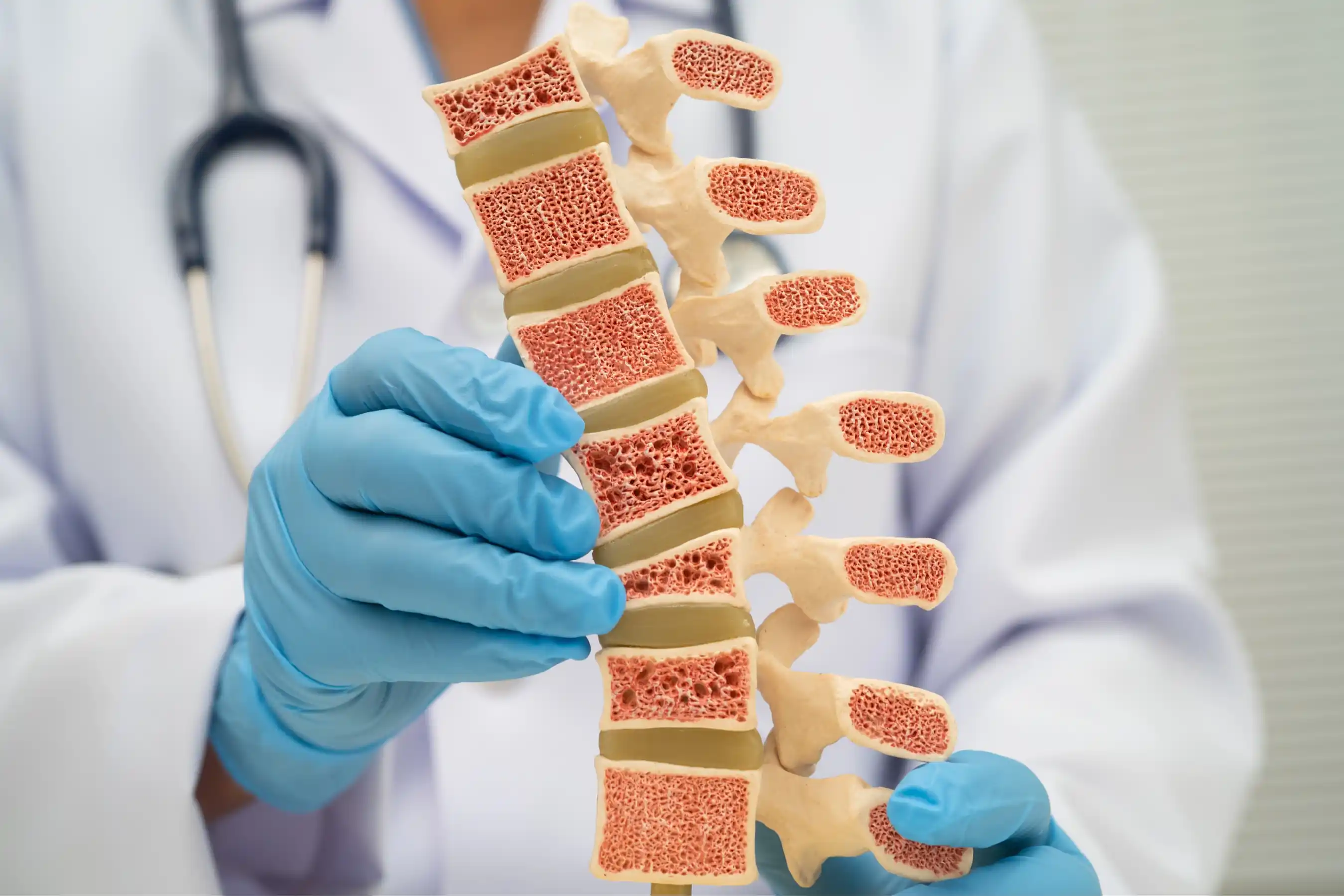
A spinal compression fracture happens when a vertebra — one of the small bones that stack up to form the spine — cracks and collapses under pressure. According to the American Academy of Orthopaedic Surgeons, these fractures occur roughly 1.5 million times each year in the United States, making them nearly twice as common as the hip and wrist fractures people usually associate with weak bones.
Most compression fractures are linked to osteoporosis, a condition where bones gradually thin and weaken with age, often without any warning signs until a bone actually breaks. Because of this, a compression fracture is sometimes the first clue that someone's bone density has quietly declined over the years.
How Balloon Kyphoplasty Fits Into Modern Spine Fracture Treatment?
Not every compression fracture requires surgery. Many heal with rest, a supportive back brace, and medication over the course of several weeks. But when pain is severe or doesn't improve with conservative care, West Michigan Pain offers kyphoplasty and vertebroplasty as part of its additional procedures.
During a balloon kyphoplasty, a small balloon-like device is used to gently restore height to the collapsed vertebra before the space is filled with a supportive bone cement. Cleveland Clinic notes that the procedure typically takes less than an hour per fractured level, is done on an outpatient basis, and is associated with better pain relief for an estimated 92% of patients who undergo it.
Signs of a Compression Fracture People Often Overlook
Because a compression fracture can develop gradually — especially in someone with osteoporosis — its early signs are frequently mistaken for normal aging or a pulled muscle. The table below highlights a few differences worth paying attention to.
| What You Might Notice | More Likely Muscle Strain | Possible Compression Fracture |
|---|---|---|
| Onset of pain | Gradual, tied to activity or lifting | Sudden, sometimes with no clear cause |
| Pain with movement | Improves with gentle stretching | Often worsens when standing or walking |
| Height or posture changes | None | Gradual height loss or a forward-curving upper back |
| Response to rest | Pain eases within a few days | Pain may persist or only partially improve |
If back pain doesn't follow the usual pattern of a strain — or is paired with height loss or a change in posture — it's worth having it evaluated rather than waiting it out.
How Big Rapids Patients Can Take Action This Month?
Spine Health Awareness Month is a good opportunity for Big Rapids patients to take stock of their spine health, particularly if they're postmenopausal, over age 50, or have a family history of osteoporosis. West Michigan Pain's team can evaluate persistent or unusual back pain, order the appropriate imaging, and walk patients through the full range of treatment options, from conservative care to kyphoplasty when it's the right fit. The practice also accepts most major insurance plans, including Medicare and Medicaid.
Take the Next Step Toward Spine Health
A spinal compression fracture doesn't have to mean months of unmanaged pain. With options ranging from bracing and medication to minimally invasive kyphoplasty, West Michigan Pain's team can help identify the right path forward for your specific fracture and health history.
If you've noticed new or worsening back pain this month, request an appointment with West Michigan Pain in Big Rapids to have it evaluated, or call the office at (231) 592-1360.
Frequently Asked Questions
What is National Spine Health Awareness Month?
It's a nationwide observance held every October to raise awareness about spine conditions and encourage people to prioritize their spinal health, led by the National Spine Health Foundation and formally recognized by Congress.
Can a compression fracture heal without surgery?
Yes. Many compression fractures heal over several weeks with rest, a back brace, pain management, and medications that help strengthen bone. Surgical options like kyphoplasty are generally reserved for fractures that don't respond to conservative care.
How do I know if my back pain is serious?
Back pain that comes on suddenly, doesn't improve with rest, or is paired with height loss, numbness, or a change in posture should be evaluated by a pain management specialist near you rather than managed on your own.
Does West Michigan Pain treat spinal compression fractures?
Yes. West Michigan Pain offers a full range of treatments for spinal compression fractures at its Big Rapids clinic, including kyphoplasty and vertebroplasty for fractures that need more than conservative care.
